
Who Plan the Stage
Activating
Greatness
Dr. Angie Paccione
deconstructed
$6B in
Consumer
Products
How Ron Lynch
sells with stories.
The Story
Behind the
Storyteller
From stories to strategy. A career built on curiosity, connection, and measurable results.
What
Event
Planners
Need
To Know
A different kind of speaker magazine.
Most speaker magazines sell the spotlight. This one studies it. The Signature Talk exists for the people who decide what happens on stage: planners, organizers, and the speakers serious enough to earn their attention.
Every feature in this magazine starts from the same question a planner asks: what will this talk do for my room? We examine the talk itself, the problem it solves, the pillars that carry it, and the story that earned the speaker the right to teach it.
Coverage here is earned, never sold. Read the founding issue, then tell us which talk your room needs next.
Inside the issue.
And the rest of the issue.
Ron Lynch, the cover · Dr. Angie Paccione · Melissa Aarskaug · Justin Maxwell · John Polish · Bobby Dutton, featured speakers. Manny Wolfe, CMO, the column. Terrence M. Higgs, Founder and Publisher.

The Story Behind the Storyteller
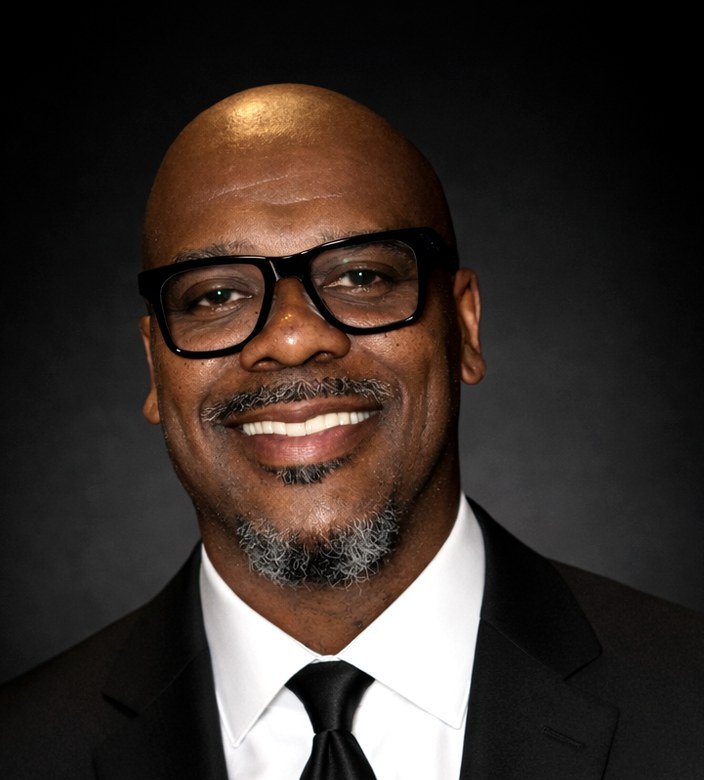
Most speakers tell stories that entertain and evaporate. Ron Lynch spent a career in direct response, where a story lived or died by whether the phone rang, and he brought that discipline to the stage intact. A Lynch story is not decoration on an idea. It is the delivery system for the idea, engineered piece by piece.
Across roughly thirty brands, from GoPro and Samsung to OxiClean, the pattern held: attention first, demonstration over description, and a story the buyer ends up telling himself. The pages that follow go behind the talk: the preparation, the pillars, and what a planner should expect when this storyteller takes a room.
Storytelling That Sells
The preparation: Lynch learned story under the harshest editor in media: the direct-response clock. As a partner at Cesari Direct Television from 2007 to 2012, his stories lived or died by whether the phone rang. A story that wandered was not art. It was inventory.
The workflow: A hook that makes a promise. A demonstration that proves it. An offer the audience can act on. It is the structure behind his talk The Infomercial Was Never About the Product, and behind more than $6 billion in consumer product sales across roughly 30 brands, from GoPro and Samsung to OxiClean.
Attention is rented. Story is what pays the rent.
The rehearsal: It shows his other training. He is a Screen Actors Guild actor who worked under Robert Altman. Takes, marks, timing. By the time a Lynch story reaches a stage, it has survived more cuts than most talks ever face.
Three pillars
carry the talk.
Attention first. The hook is a promise the story has to keep. Lynch opens the way his spots opened: with the problem already moving, never with a warm-up the audience must forgive.
Demonstration over description. Show the idea working; do not describe it working. It is the infomercial discipline beneath his talk The Infomercial Was Never About the Product: the product was never the subject. The demonstration was.
The story the buyer tells himself. People do not repeat your story. They repeat the one it lets them tell about themselves. Lynch builds for that second telling, which is why the stories travel out of the room.
His current talks carry the same architecture: The $6 Billion Lesson, on what selling billions taught him about human nature, and Pyramid to Pinball, a field guide to how businesses actually move.
What this talk
does for a room.
The room it serves: sales, marketing, and leadership audiences who live by persuasion, and any room whose members must make ideas land with people who did not ask to hear them.
What to expect: a keynote built like his spots were built, story carrying teaching, every segment earning the next. Preparation is the feature here: by the time this talk reaches a stage, it has survived more cuts than most talks ever face.
What to request: the talk film when it is produced through Sterling Stages, the one-sheet, and the formats on offer. All three live with the full profile in the Library.
Booking enquiries for Ron Lynch: hello@signaturetalkmag.com · (602) 584-1770. The full booking profile, with formats and the talk film as it is produced, lives in the Signature Talks Library.
Open the booking formGive it a stage-ready voice.
Develop your signature talk. Own your stage. The studio where the talks in this magazine are produced: rehearse, measure, improve, produce, amplify.
STERLING STAGES · INSIDE SPEAKERREALM

Activating Greatness
Greatness is not a trait. It is a decision, made on purpose.
The architecture: Read the way a planner reads it, Activating Greatness is built in three moves. It opens with the power of potential, her argument that the capacity in the room is almost never the constraint. It turns on activation: leadership as the switch between insight and assignment. And it lands on recalibration, the discipline of adjusting performance before drift becomes decline.
What this talk
does for a room
The authority: Dr. Paccione is a former member of the Cabinet of the Governor of Colorado, an executive facilitator, and a leadership expert who addresses corporate executives, educators and school leaders, entrepreneurs, government leaders, and mission-driven organizations.
The transformation: A room that arrived managing around its people's potential leaves recalibrating its performance around it. That is what the talk is for, and it is why it opens this issue.
- Names the real bottleneck: potential managed like a liability instead of activated like an asset
- Gives leaders a three-move sequence: potential, activation, recalibration
- Built for executive, education, government and mission-driven audiences programming 2027 now
Booking enquiries for Dr. Angie Paccione: hello@signaturetalkmag.com · (602) 584-1770. The full booking profile lives in the Signature Talks Library.
Open the booking formDeveloped, Promoted,
and Discovered.
Quarterly virtual summits, showcases, and podcasts. The Founding 12 are confirmed, and the proof built here carries into SpeakerRealm and RealmAgency.
THE SPEAKER COLLECTIVE ·
A SPEAKERREALM COMPANY

The
Leadership Firewall
The autopsy, continued.
Verdict: a one-sheet that answers the committee's questions before they are asked.
Booking enquiries for Melissa Aarskaug: hello@signaturetalkmag.com · (602) 584-1770. The full booking profile, with formats and the talk film as it is produced, lives in the Signature Talks Library.
Open the booking form
The Proof Behind
the Promise
Every speaker you are considering has made you a promise. The keynote will land. The room will lean in. Your committee will look wise for choosing them. I spend my working life on the other side of that promise, building the team that pursues stages for speakers, so let me tell you what I would check if the event were mine.
First proof: a real talk, in a real room. Not a sizzle reel of applause shots. A sustained piece of the actual talk, in front of an actual audience, where you can watch the room decide. If a speaker cannot show you the talk, you are being asked to book the biography instead.
Second proof: materials that survive your committee. You are rarely the only decision. The one-sheet, the bio, the talk description: they have to make the case in a room the speaker will never enter. Weak materials are not a design problem. They are evidence about how the work gets done.
The proof behind
the promise.
Third proof: a team behind the speaker. Ask who answers your emails in the week of the event. Who handles the contract, the travel, the tech check, the follow-up your attendees were promised? A professional operation has names for those questions. Our own pipeline exists because the chasing, negotiating, and nurturing are a job in themselves, and the speakers who treat it that way are the ones still being rebooked.
The stages tell the story. Speakers from our roster have stood in rooms run by SHRM and DisruptHR, at ChannelCon and the AI Applied Summit, because somebody did the unglamorous work of proof long before the applause: the right rooms found, the materials made ready, the applications filed and followed up.
So here is my whole method, planner to planner. Do not book the promise. Book the proof: the film, the materials, the team. The speakers who have all three are rarely the loudest in your inbox. They are simply the ones whose next stage is already being built.
get booked are the
ones who applied.
Sterling, your AI booking agent backed by a human team, sweeps the open calls, prepares the applications, and files the ones you approve.
SPEAKERREALM · YOUR PROFILE IS FREE

Business Wealth to
Generational Wealth
The talk: Maxwell tells business owners something their advisors won't: the income you've built isn't the asset you think it is. The talk maps the road from a business that pays its owner to wealth that outlives its owner.
Programming the talk.
Booking enquiries for Justin Maxwell: hello@signaturetalkmag.com · (602) 584-1770. The full booking profile, with formats and the talk film as it is produced, lives in the Signature Talks Library.
Open the booking formChoose the talk,
not the résumé.
Start from the problem your room already feels, then test the talk against it. Ask for the proof a booking decision deserves: a watchable film of the talk in a real room, the one-sheet, and a planner who has hosted it.
The Library in this magazine exists so that test can be run before anyone gets a call back: one page per talk, the problem it solves, its three pillars, and the origin story that earns the right to teach it.
Book the talk your room needs, then check the speaker can prove they deliver it.
Programming is
moving earlier.
From our news desk, which tracks open calls as organizers publish them: association call windows keep moving up the calendar, and agendas are half built by the time a deadline is announced. The founding issue's own listings this month include calls closing in October for conferences held next summer.
The working consequence for a planning desk: build the shortlist before the call opens. The speakers in this issue were selected by editors; the planners who book earliest book from a list that already exists.
Next in this department: what the strongest proposals include, read from the calls themselves.
Now accepting speakers for The Authors & Thought Leaders Summit, November 24–25. Summit seats stay free for everyone.
SUMMITS · INSIDE SPEAKERREALM
Happy People
Don't Quit
Retention is not a program. It is a byproduct.
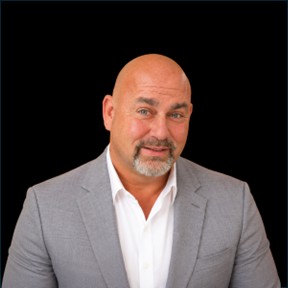
The architecture: Three words long, and they are the program's own outcomes: stay, perform, thrive. Polish argues the order is the argument. Get people to want to stay, and performance stops being a management problem. Get both, and thriving is what the workplace is for.
Stay. Perform. Thrive.
The talk's order is its argument. Polish does not begin with performance, because performance demanded from people who are leaving is a loan against a closed account.
The transformation: Leaders leave auditing their own workplace the way their best people already do, and building the kind of place people want to stay, perform, and thrive.
The Deconstruction's finding: retention is not a program you buy. It is the residue of the first pillar done daily.
Booking enquiries for John Polish: hello@signaturetalkmag.com · (602) 584-1770. The full booking profile, with formats and the talk film as it is produced, lives in the Signature Talks Library.
Open the booking formSix talks, examined.
Every talk in the Library is here on merit: a real talk, professional materials, a watchable film as it is produced. One page per talk: the problem, the pillars, the origin.
Full profiles, formats, and booking: the Signature Talks Library at signaturetalkmag.com.

Rise Above
the Noise
The preparation: Dutton is a licensed commercial pilot and entrepreneur, and his preparation starts where a flight does: with a checklist, run the same way every time, so that nothing about delivery depends on the day he is having.
Altitude is a decision you make before the weather arrives.
Checklist first.
Altitude always.
The rehearsal: In his world, rehearsal is simulator time. He practices the talk under load, so the room never has to watch him improvise his composure.
The talk: Think Like a Pilot: Rise Above Stress and Busyness runs the same system in the room: climb above the noise, read the instruments that matter, and prioritize happiness, systematically.
Booking enquiries for Bobby Dutton: hello@signaturetalkmag.com · (602) 584-1770. The full booking profile, with formats and the talk film as it is produced, lives in the Signature Talks Library.
Open the booking formEvery Student Has a One
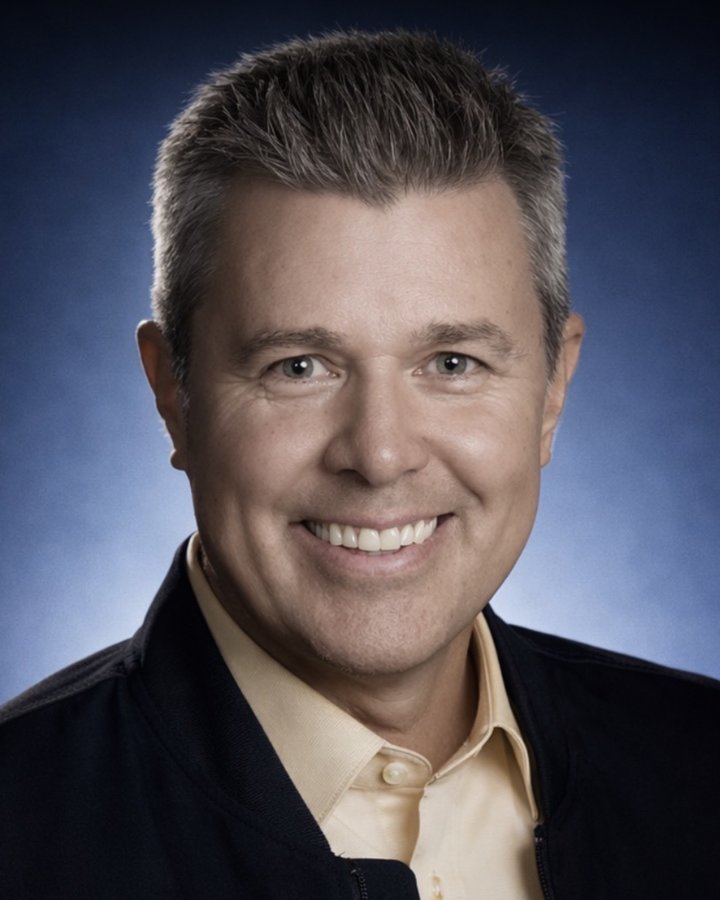
The Speaker's Brief is a paid placement. Speakers are accepted on the strength of the argument; the page is theirs.
Every school year, I watch the same transaction happen. A speaker is brought in to motivate the students. The assembly is good. The energy is real. The students leave the gym louder than they entered it, and by the following week the building is exactly as it was, because nothing in the transaction was ever designed to survive the week. The motivation was rented. It arrived with the speaker, it performed for an hour, and it left with the speaker, and everyone involved calls this a success because the hour itself was loud.
I have stopped believing the loud hour is the product. Here is my argument, and it is the argument my talk "Maximize Your One™" is built on: every student already has a one. One strength they trust. One commitment they would actually keep. One reason, that is theirs and not an adult's, to do the work in front of them. Motivation that lasts is not poured into a student from a stage. It is organized around the one the student already has. The speaker's job is not to be the source of the energy. It is to help each student find the one, name it, and build the week around it.
Consider why the generic version evaporates. A message addressed to everybody is owned by nobody. When a student hears that they should dream bigger, work harder, believe in themselves, the advice may be true and it is certainly well meant, but it arrives without an address. There is no specific strength it attaches to, no specific commitment it asks for, no specific Tuesday afternoon where it will be tested. Feelings without assignments fade on schedule. The student was never unmotivated in the way the assembly assumed. The student was unorganized: carrying ability they had never been asked to aim at one thing, in their own words, with their name on it.
The one is not a slogan, and it is not found by asking a student what they are passionate about, a question most students honestly cannot answer yet. It is found smaller than that. It is the subject where the work comes easier than it should. It is the role on the team, athletic or otherwise, where other people already rely on them. It is the thing they do for their family that nobody applauds and they do anyway. A student's one is usually already visible to the adults around them before it is visible to the student, which is why I tell educators this plainly: you are not an audience for this work, you are its first witnesses. The teacher who can say to a student, here is the strength I keep seeing in you, has done more for that student's motivation than any assembly, including mine, because the teacher will still be there in March.
School culture is where this either compounds or dies. A building where the adults trade knowledge about students' strengths, where a coach, a teacher and an advisor can each name the one they see in the same student, becomes a place where a student hears the same true sentence from three directions until it stops sounding like encouragement and starts sounding like fact. That is teacher development in its most practical form: not another initiative, but a shared discipline of noticing. It costs nothing but attention, and attention, aimed at the right one thing per student, is the whole investment my argument asks a school to make.
Motivation borrowed from a stage lasts until lunch. Motivation built on a student's own one lasts, because it was never borrowed.
What changes when a student has a named one? Goal setting changes first. A goal hung on somebody else's ambition is a chore; a goal hung on the student's own strength is a plan. The student who knows their one can be asked a harder and more useful question than "what do you want to achieve?" They can be asked, "what does your one require of you this month?" Performance mindset changes next. Under pressure, a student with a one has somewhere to stand. The bad test, the lost starting spot, the week everything slips: these stop being verdicts on the student's worth and become weather around a commitment that has not moved. Character, the word every school has on a wall somewhere, stops being a poster and becomes a practice: character is what a student does for their one on the days they do not feel like it, which is most days, which is the point.
Student engagement, measured honestly, follows from the same root. We ask why students do not engage with school, as if engagement were a mood the building either has or lacks. I think engagement is a byproduct. Students engage with the parts of school that connect to something they have claimed as theirs. Give a student a one and you have given every teacher in the building a handle: this lesson, this assignment, this practice can be tied to the strength the student has already named. Leave the student unnamed to themselves and every hour of the day is generic, and generic is the one thing no student has ever been motivated by for long.
So here is what I ask of the rooms I speak in, and it is less comfortable than applause. Do not ask whether the students were inspired. Ask, one week later, whether each student can still say what their one is, in their own words, and what they did about it on an ordinary day when nobody was watching. If they can, the assembly did its job, and most of the credit belongs to the educators who kept pointing at the one long after the speaker left. If they cannot, then the school bought an hour of noise at assembly prices, and it should not buy it again, from me or from anyone.
Find the one. Build around it. That is the whole method, and it works precisely because it does not depend on the speaker at all.
Best-fit audience: Students and the educators who lead them; school assemblies and education conferences
Event context: Student motivation keynote/assembly; educator development sessions
The problem: Assembly motivation that evaporates within the week
The takeaway: Every student leaves able to name their one and what they did about it
Booking enquiries for Brett Bernard and Maximize Your One™: see his Directory listing.
Every take scored. Every talk filmed. The Bookability Score shows a speaker exactly what a planner will see.
STERLING STAGES · PRODUCE YOUR TALK
The booking checklist.
Run the fit test. Name the problem your room already feels. If the talk does not solve that problem, no résumé repairs it.
Request the proof. The talk film, the one-sheet, one planner reference from a room like yours.
Read the pillars. Three teaching points you can repeat to your committee without the speaker present. If you cannot, the talk is not ready to be booked, or not ready to be explained. Either way, you have learned something.
Confirm the operation. Who contracts, who travels, who answers in event week. Write the names down now, not then.
Before the speaker arrives.
Send early: the audience brief (who is in the room, what they carry), the room plan, the technical facts, and the introduction exactly as it should be read.
Ask back: the talk's pre-event resource for attendees, the post-event follow-on, and the speaker's own checklist for the day. The Event Playbook features in this magazine show what that exchange looks like when it is done well.
Close the loop: a debrief within a week, while the room is still warm. The second booking is decided there.
The talks, on film.
This department is where the magazine stops describing talks and starts showing them: curated films and preview reels, captioned, chaptered, and identified by speaker and talk, each with its booking path beside it.
The standard is strict. A film runs here only when it is the speaker's own approved production, made through Sterling Stages, with permission on record. Nothing is fabricated, and nothing is published unapproved.
In Motion premieres with the first Sterling Stages productions of the founding talks.
Now in production.
Each production follows the Sterling Stages Signature Talk session: a planner pitch piece, the ten-minute talk film, and the origin interview. As each film is approved, it appears in this department and on the talk's Library page.
The cover is
being earned now.
Issue No. 02 continues the founding departments: a new Deconstruction, the Booking Brief on what the strongest proposals include, the Planner's Toolkit on the event-week desk, and the first Signature Talks in Motion premieres.
Coverage is selected the way this issue's was: a real talk, professional materials, a watchable film. The next cover is not announced in advance, because it is not sold in advance. It is earned, and then it is obvious.
Planners: the monthly Top Talks brief draws from the issue. Join The Mic list at signaturetalkmag.com to receive it.
Booked everywhere.
Summits, showcases, and podcasts that build the proof planners ask for, carried into the SpeakerRealm pursuit.
THE SPEAKER COLLECTIVE · APPLY TO SPEAK